
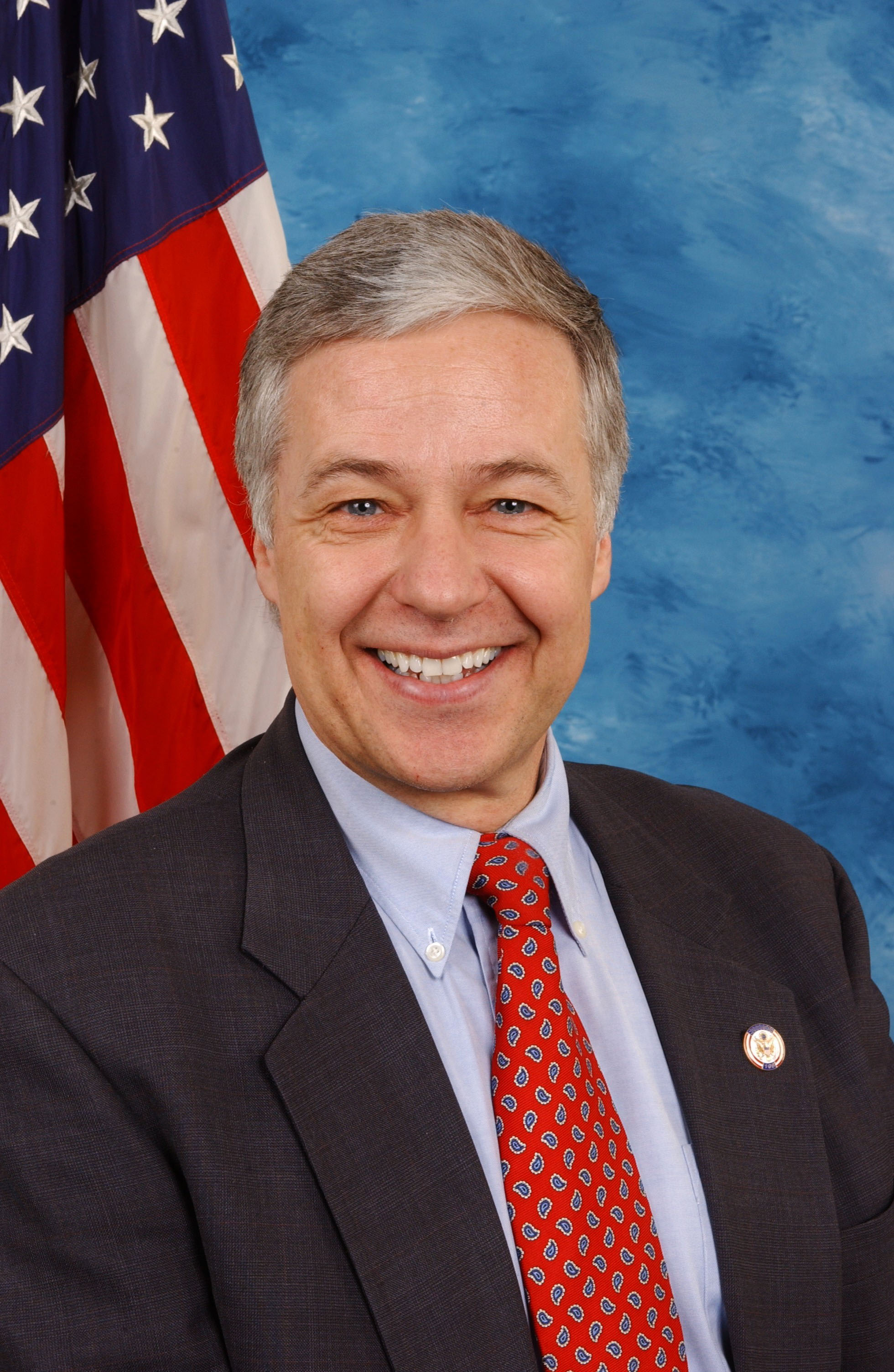
Michael Michaud, Democrat
By Garrick Hoffman
Working Man Transformed
Directly out of high school, Mike Michaud followed his father and grandfather’s footsteps and began working at the Great Northern Paper Company mill in his native town of East Millinocket, Maine. Almost thirty years later, upon seeing the nearby Penobscot River become abjectly polluted with “so much sludge you could practically walk across it,” Michaud was inspired to switch gears and seek a position in the state Legislature.
He won the race, cleaned up the river, and since then never backed out of his political work life. He bypassed college altogether, eventually claiming the position of President of the Maine Senate. Since 2003, Michaud has served as the U.S. Representative for Maine’s 2nd congressional district. He remains one of the very few members of congress who never attended college.
Now, as the Democratic candidate in this year’s gubernatorial race, Michaud seeks to embrace a new role for Maine.Michaud stresses the importance of “affordable post-secondary education that maintains our state’s competitiveness and prepares Maine students for the changing economy without burdening them or their families with crippling student loan debt.”
Contrasting from Eliot Cutler’s “Pay it Forward, Pay it Back” plan for college, which would eliminate tuition entirely, Michaud envisions a different approach. He proposes to implement a tuition-free sophomore year for college students. The reason for this is because, according to Michaud, dropout rates during sophomore year, on average, soar due to unaffordability. He believes that if the sophomore year becomes tuition-free, students will be incentivized to stay in college. The estimated cost to implement this plan is around $15 million, and Michaud has been unclear about how to fund this.
Adamant about the scope of gravity regarding student debt and the lack of college graduates in Maine, Michaud says he believes that “this new investment [in the sophomore year] in the university system can help increase enrollment and bring more students back to our schools, which helps the overall bottom line across the system.”
In the Eggs & Issues gubernatorial debate held earlier this month, Michaud said that, “What this region needs is a strong public university system. …What has happened is a perfect storm here for USM and higher education. State support has been stagnant. Costs have been going up, and university enrollment has been going down. …What we have to do is bring people together…to focus on that long-term strategy.”
Michaud stresses the importance of having a skilled, educated workforce in Maine to improve the economy and to see an overall positive progression for Maine. He has said that education is not an expense, but an investment for the state’s future.
Under his “Maine Made” plan, aside from the free sophomore year initiative, Michaud plans to “create a tuition guarantee at Maine’s public colleges and universities for incoming students,” and to “establish the Maine Accelerated Learning Grant to promote year-long learning at community colleges.” The mission of this “Maine Made” component is to augment the number of college graduates in Maine substantially. He seeks to achieve this by “reducing the cost of a four-year degree, accelerating the process for completing two-year community college programs and strengthening college preparation, starting at pre-kindergarten.”
In a column published this year by the Bangor Daily News, contributor David C. Wiggin said that Maine’s “high school graduation rate is quite respectable, but post-secondary education needs much greater support. …We must fund our public university system. We must also make post-secondary education affordable and accessible.” Wiggin went on to say that, “Michaud, D-2nd District, has demonstrated his ability through his success in developing budgets in the Maine Legislature that…provided support for education.”
In contrast, Howard Segal, a University of Maine history professor who also served as a contributing writer for the Bangor Daily News this year, said that once Michaud left his House seat in pursuit of governorship, Segal “had doubts about whether [Michaud] really understood what troubles thousands of Maine citizens about the University of Maine System’s current structure, values, and operating procedures.” Segal continued, questioning Michaud’s proposals for higher education as well as his overall degree of knowledge in the matter.
Michaud bears a track record that showcases his past on certain educational matters. According to OnTheIssues.org, for example, he voted “No” on reauthorizing the DC opportunity scholarship program. He voted “Yes,” however, on an array of bills: $40 billion on green public schools; an additional $10.2 billion for federal education and health and human services projects; and $84 million in grants for Black and Hispanic colleges.
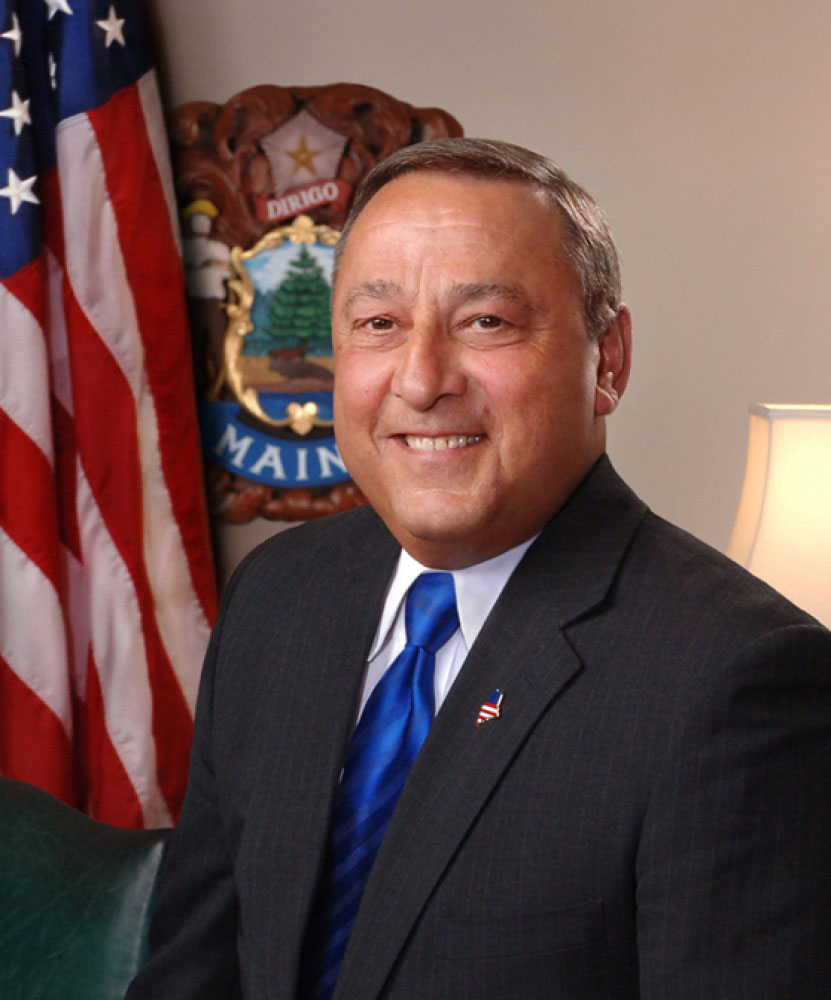
Governor Paul LePage, Republican
By Erik Squire
LePage on Higher Education
For he first time ever Governor LePage faced off with his two opponents in a debate held Oct 8th at an Eggs & Issues form. He addressed some of the challenges USM are facing by discussing his views on higher education.
Higher education is a big topic for the gubernatorial candidates, seeing as how crucial a role education plays in the economy. To put this into perspective, consider this: The New York Times published strong research demonstrating that graduates with a four year degree earned an average of 98% more an hour than with no degree.
That being said, Maine faces some tough issues with higher education. For example, Maine has the second highest cost for public Universities in the nation, per median family income. Though we have a large percentage of high school graduates, we still rank among the bottom four states with our SAT scores. Perhaps this is the reason why 62% of traditional incoming freshman at SMCC must take remedial coursework. What’s more, Vacation Land’s current graduation rate with an associate’s degree, within 3 years, is only at 25%. Finally, only 27% of Mainers have completed a bachelor’s degree or higher; two points lower than the national average.
LePage was once quoted as saying that, “College is not for everyone.” Although, during the debate he did mention that the Maine Community College System (MCCS) needs to do a much better job at bringing people to their school and bringing back the trades. In his own words he said that “They’re (MCCS is) focused a little too much on Liberal Arts.”
At the debate LePage also talked about a couple of education programs that he considered as being exemplary. The first one he mentioned was Maine Maritime Academy. He called it “The best education in America, best value in America, and best starting wages in America.”
His opponent Eliot Cutler talked about merging all of Maine’s public universities together for better efficiency. In regard to that LePage said that he wasn’t completely sure that he agrees about merging the University of Maine System out of worry that their different missions would become corrupted.
The Governor expressed how he finds it a shame that people are going to be losing their jobs at the University of Maine. However, he feels that the University of Maine system needs to reinvent itself. Along that vain, he considers the other excellent example of a successful school to be University of Maine at Fort Kent. One of the things that he considers to be a great achievement for them is their high school outreach. He boasted about their efforts with what he calls the bridge year, or fifth year. That is what he considers to be the model, as he says “K-20.” He believes for this kind of success to be materialized, the whole education system needs to work closer together.
According to LePage, Fort Kent has had great success in assisting 24 students, both 11th and 12th graders, by taking them to the college and helping them finish both years of high school. One student completed a year and a half of college, seventeen students finished the first year of college, and six completed at least one semester of college, all not having to pay tuition.
Lastly, he briefly mentioned the possibility of employers footing the bill for higher education, and then having the state offer them a tax break incentive for doing so. All in all, at the end of the debate LePage had pulled in some laughs, made a few interruptions (but caught himself), and exclaimed that most of his gaffes were in the first two years of his term.
As far as LePage’s actual history voting/vetoing bills that affect higher education; LePage did veto a $32 million budget to address a gap in the FY15 budget. As the New England Board of Higher Education indicates, part of the $32 million vetoed, included investment in “key education and workforce training programs including $650,000 for the Bridge Year program, $300,000 for Maine’s Graduates and $750,000 for Head Start programs.”
Whoever is elected, come this November, they will have a big task facing them. Let’s hope for the sake of Maine’s future that the winner will be successful in addressing our states education needs and troubles.

Eliot Cutler, Independent
By Garrick Hoffman
An Interview with Eliot Cutler
On Friday, October 3, Eliot Cutler sat down for an interview in his campaign headquarters in Portland’s Old Port with Beacon staff members Jason Glynn, Erik Squire, and myself. The hour-long interview broached a multitude of education-related topics, from Cutler’s educational plans for Maine’s future, to student debt, to a systems’ merging between the Maine Community College System (MCCS) and the University of Maine System.
Beginning with the topic of Cutler’s higher education plan, the students each had turns asking questions, about ten altogether. Cutler, in response to this first question, revealed his plan, titled “Pay it Forward, Pay it Back.” This design has already been implemented in Australia with purportedly successful outcomes. It’s also been proposed but ultimately rejected in Oregon; however, it remains an active possibility for the future there.
With this plan, which is still a bit experimental, “Pay it Forward, Pay It Back” will enable students to enroll in college tuition-free, with the state borrowing funds to make this possible, Cutler said. Participants in this plan would be required to pay back 3% of their income in the first twenty years of their careers. Because Cutler believes this will incentivize more people to attend college – acknowledging that it’s primarily money that hinders people’s incentives to pursue higher education – he dismisses Mike Michaud’s proposal to render the sophomore year of college free. Cutler argues that this proposal is not enough to make any debt-fearer galvanized to enroll.
Cutler explained the “Pay it Forward…” plan further, saying that students who stay in or come to Maine after completing any two- or four-year college will be rewarded with tax breaks. Under his plan, Maine “will give you a tax credit against your Maine income tax liability on a dollar-for-dollar basis for every dollar you’ve paid on your student debt.”
He believes this provision will encourage young, skilled workers to enhance the state’s workforce and thereby enhance the state’s economy, which he believes is paramount. He remarked that this type of workforce is already in high demand in Maine, with many employers finding their businesses deficient of skilled laborers whom employers need to effectively operate.
When asked how the fund for the “Pay it Forward…” plan will be generated, Cutler explained that Maine will need to borrow a great deal of money. He said that the interest rates for borrowing are very low, so the state should seek to capitalize off of that. Students who incur the benefit and obligation would pay the fund back, and the fund would take a percentage of this money by “investing in the next generation, and it becomes a revolving fund, and the funds are going out and coming in at presumably the same rate.”
Further, to make the Maine college system more efficient and affordable, Cutler supports merging the community college and university systems, believing this will consolidate college funds while alleviating costs. Because Maine roughly contains a population the same as the Greater Buffalo, New York region – about 1.3 million people – he used Noah’s Ark as a metaphor for the current college systems, questioning why there are “two of this, two of that.”
He asserts that consolidating the systems would make the collective system run more efficiently and become more affordable for prospective students. This was the same proposal he made about five years ago, and he claims that states that have merged the systems have been successful.
With the collapse of the housing market dragging down the national economy in 2008, it’s reasonable to look at the $1.1 trillion of student debt and feel some degree of trepidation for another recession in the future. Cutler was asked what should be done to “rein [the student debt bubble] in before it bursts.” He replied that, in order to ameliorate this issue, the country will need a federal response, which would come in the form of legislation. He mentioned that Maine’s independent U.S. senator, Angus King, has been extensively involved in this process. But Cutler also said that the “Pay it Forward…” plan will help in this cause, saying that it will eliminate student debt by perishing tuition and creating tax credits for college graduates.
Cutler provided some haunting facts: Maine ranks 34th in the country in the number of graduating seniors who go on to pursue post-secondary training or education. He said this is bad for the state and the individual due to, respectively, workforce deficiency and lower income over the course of a lifetime.
In addition, he said that in 2003 Maine was economically neck-and-neck with Massachusetts, ahead of Vermont and Connecticut, and was even outpacing that of the national average.
Since then, Maine has been on an unyielding decline, and in 2013 Maine was officially behind every New England state, and far below the national average. Maine’s income levels are 40 percent behind some New England states while also lagging behind the rest of the country. Cutler attributes these dismal facts to the lack of an educated and trained workforce, and he believes Maine can recover if the state can make the already-established businesses more prosperous, this being made possible by the aforementioned workforce.
When the topic of energy emerged, Cutler expressed that Maine is a goldmine for energy resources, saying that, “We have the biggest basket of renewable sources.” This includes off- and on-shore winds, solar and tidal power, biomass, and run-of-river hydro. These sources have low life-cycle costs, and he doesn’t believe Maine has been putting forth enough development into them, instead spending too much on high-operating cost resources such as oil and natural gas. He asserts that the current administration has not been pursuing the necessary action to take advantage of renewable resources.
Categories: Uncategorized
 The SMCC Beacon