By Carlin Whitehouse
There was once a time 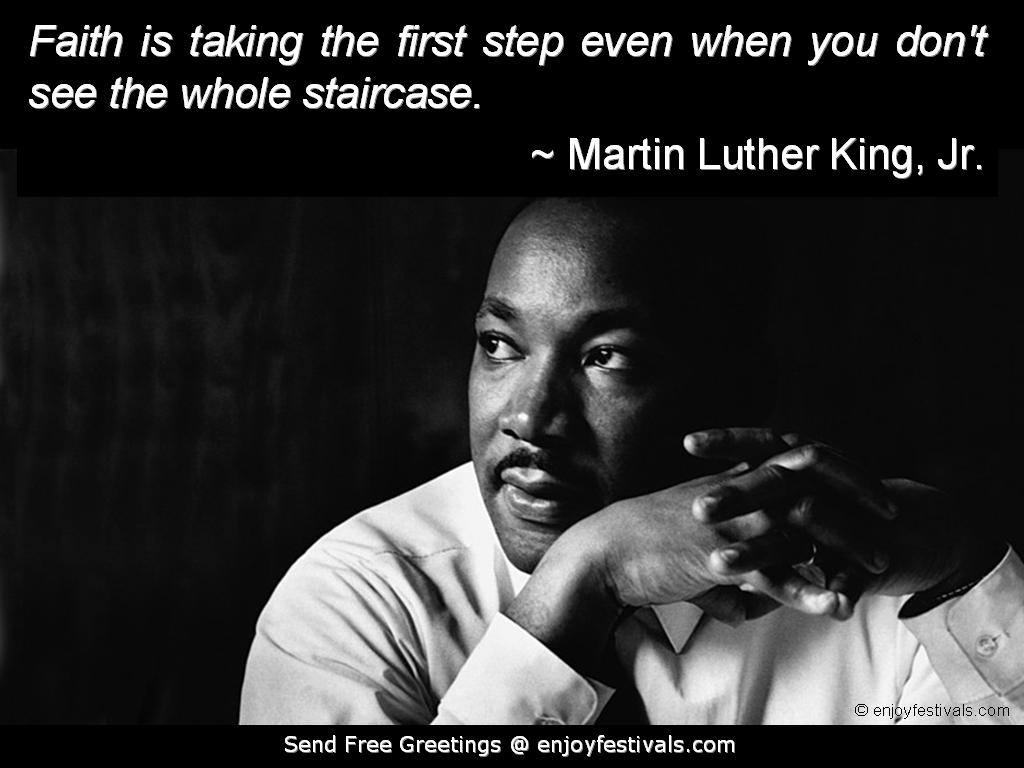 in America when the rearing head of racism was unmistakably ugly. One could point a finger and say, “There. That is ignorance. That is hatred.” One could witness, right out in the wide, open light of day, the white majority enforcing its supremacy – on streets, at restaurants, in schools, courthouses and the chambers of Congress. The very same government that was founded by the virtues set forth in the Declaration of Independence and Bill of Rights was [I]willfully[/I] denying equality to millions of her citizens.
On January 19th, our nation observes Martin Luther King, Jr. Day. Most Americans place his ideals back within that era of racial hostility. They view his legacy as a triumph over that monstrous time, and how his influence virtually destroyed the institution of racism. The truth is the United States has never really gotten all that close to fulfilling his vision of “ris[ing] up and liv[ing] out the true meaning of its creed: ‘We hold these truths to be self-evident; that all men are created equal.’” One need not go all the way to Georgia, Mississippi, and Alabama to see that our valleys, mountains, rough and crooked places have certainly not been made exalted, low, plain and straight. The proof is right here in Maine – as well as Missouri, Ohio, California and New York. This nation has not achieved justice or equality.
What Americans generally don’t spend much time contemplating is how that beautiful, vivid dream of racial harmony more closely resembles the one about which Langston Hughes’ wrote. Rather than coming true, the cruel reality is that Dr. King’s dream… has been deferred.
In 2015, the face of racism has changed. The warts, boils and scars have become nearly imperceptible to the naked eye – mostly because they have simply taken different forms. “Boy” and “nigger” have been replaced by “urban youth” and “thug.” Coded, subtler language is now the norm when referring to minorities.
Segregation gave way to incarceration and gentrification. U.S. imprisonment rates of blacks and the gap of wealth [I]exceed[/I] that of South Africa in the height of apartheid.
Jim Crow has mellowed into a don’t-ask-don’t-tell policy of persistent stereotypes and fear. A federal commission found that in the last decade, sentences for black men are 20% longer than white men’s for similar crimes.
Restricted access to the voting booth now seems like a secondary issue next to the seismic shift of private money in political campaigns, and the profit-driven media that feeds the populace “infotainment” and hysterical half-truths.
Many (and especially those who command great power and privilege) will insist that we have evolved beyond the need for protest, marches and grandiose speeches on the steps of our capital’s most sacred landmarks. Their voices implore Americans to abstain from emotion and to focus on the good that is being done today, rather than the injustice of yesterday. They will maintain, “Things are better than they’ve ever been!” and that “The past is the past.” Well, a collective mentality that disconnects from history is infamously condemned to repeat prior mistakes.
Sure, there is a national holiday to honor Martin Luther King, Jr.’s great works – and there should be! It’s important to note that even that symbolic gesture was made with a shameful amount of controversy and resistance from a great many outspoken representatives “of the people” and state governments (including New Hampshire) as recently as 1999. Some southern states honor MLK by forcing the holiday to be officially shared with Robert E. Lee. On a related note, the Confederate “stars and bars” battle flag, which was widely used as a symbol of white supremacy throughout the last century, remains on the Mississippi flag, flies at the South Carolina state house, and is offered on license plates in no less than ten states.
Were Martin Luther King, Jr. alive today, he’d be pleading with us to try harder. He would surely be present at the focal points of the Black Lives Matter movement. Not because of anti-police sentiment, or the desire to fan the flames of derision, but because his work was never done until the Black community was [I]truly[/I] free at last. When Americans cast aspersions at the activists and their rallying cries of “Hands up! Don’t shoot!” or “I can’t breathe!” they place themselves on the same side of history as those who cheered the violence on the Pettus Bridge. If this nation’s citizens question the validity of people taking peacefully to the streets to petition their government for a redress of grievances, then they reject the Constitution. Furthermore, they should examine how they can honor Martin Luther King in ways that transcend the mere observance of a holiday.
The very hardest part of staring down the ugly beast of racial bias and fear is that we see ourselves reflected in its eyes. To update LBJ’s famous Congressional address in March of 1965: “Black Lives Matter” is not exclusively about black people. This is not really a problem with police. There is no Ferguson, no Cleveland, and no New York City problem. There is only an American problem.
Whether or not we choose to accept the challenge, each and every one of us is part of it.
Categories: Calendar
 The SMCC Beacon