An Interview with Filmmaker and SMCC Professor Huey Coleman

Huey Coleman on Pamola Peak. Photo from FilmsByHuey.com
By Garrick Hoffman
Liberal Arts Major
With summer looming, plenty of us will be hitting the trails and sauntering about the serenity that is nature. More specifically, many of us will no doubt land on the revered Mount Katahdin, Maine’s highest point of elevation and the terminus of the Appalachian Trail.
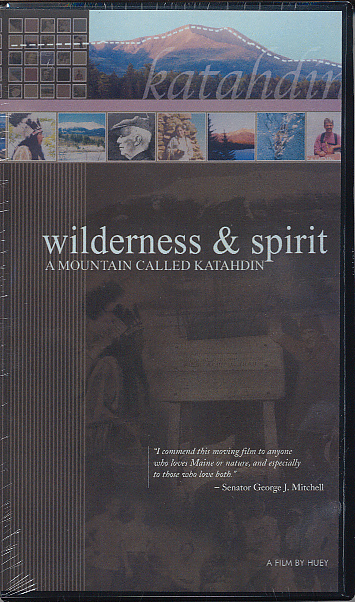
Thirteen years have passed since Huey Coleman, a Communications and New Media professor and independent filmmaker here at SMCC, released his highly acclaimed film, Wilderness and Spirit: A Mountain Called Katahdin. The film illustrates how Katahdin is more than just a topographic number and landmark; it’s also a spiritual sanctuary. Professor Coleman sat down to discuss Wilderness, how it came into fruition, and his affinity for Katahdin.
Your film, Wilderness and Spirit – what is it about?
Originally it was going to be sort of a portrait of Katahdin. But what I found very quickly as I started making it – and I knew this sort of through the Penobscot people as well – it was a sacred place to be people. It represented a spiritual place and there were a lot of different ways of interpreting that, from Henry David Thoreau and the Penobscots and on up to all the contemporary people. At the same time, it was a wilderness, so I wanted to raise that issue of nature and spirituality as well as a portrait of Katahdin and what it means to the people who go to it.
What is your history with Katahdin? What drew you into it and what’s your background with it?
The first time we went to Katahdin it was my wife and I, and I was in my thirties. The kids were just born. I grew up in New Hampshire and didn’t come to Maine until I went to Colby College. So I sort of knew of Katahdin but I hadn’t really been there until the 1980s. We just went up once and enjoyed it, and it turned out we went there for 25 years in a row. Our kids sort of grew up every summer knowing they’d be there for one or two weeks in Baxter State Park.
At first we’d go for a few days, then we said we wanted to go for a week, then we ended up a good five to eight years where we’d go two full weeks staying right in the park, which was a real wilderness experience because there was no radio, no TV, no nothing. There weren’t cell phones and even if there were they didn’t work. We just felt that was one of the big important decisions as a family. We went with my wife’s sister and their family so it was a big group effort and they were just very memorable times. So I was sitting on the porch one day because we would try to get these cabins for part of the time at Kidney Pond and I said, “Gee, I’m a filmmaker and I’ve been coming here and I really like this place. I should make a film about it.”


I don’t know if I’ve seen any other documentaries on Katahdin.
There really wasn’t any. There were people that had been in films but no documentaries on it. And if you’re thinking about starting to make a film you have to think about the size and the scale and the money. [Laughs] And I also knew right off that I couldn’t make it without the help or the participation of the Penobscots, so in 1996 I was doing an artisan residency with an Indian Island school, which is in the Indian nation on Indian Island. As it turned out, I was doing a residency, which I’ve done many, many of where I go to a school, work with youth and get them to make movies. So I was at the Indian Island school with Penobscot children and I was teaching them how to make animated movies based on their stories. Of course they’re fantastic stories and lend to animation well. They did a really good job; they were award-winning, and it went very well.
One day when I was at the school, Barry Dana, who you see in the film and was the culture teacher, asked me if I would document the Katahdin 100. That’s when I knew I could make the film because I was going to be able to film something that’s never been filmed before, done by the Penobscots. And also they wanted me to document that, so then I knew Barry would be interviewed, and John Bear Mitchell is also seen in the film, so then I knew I could make the film that I wanted to make. Then after that, it was just meeting all the people and coordinating with Baxter State Park and raising funds, which isn’t easy and takes a lot of time. But it all happened and I finished the film. It took about five years and it was in ‘97 that I really started filming, so it was from ‘97 to 2002.
It wasn’t your first film, right?
 No, right off in college I had started making films. I made experimental films; they were short, and when you’re starting off it’s hard to make big feature films. So they were short films, they were in a tradition that was sort of art-world tradition of film as an art film. They weren’t really documentary. They were more like poems, although a lot of them had humor in them. I worked with actors and they were shown at different film festivals. I had a lot of screenings in Portland in the ‘70s and the early ‘80s, but in the early ‘80s I started making documentary films. That’s what I realized what I really wanted to do. My first film I made on my own that was a documentary – I had already made 20-plus short films – was in 1983, and then I made one on two Franco-American musicians, and then the next one was on a still photographer, Todd Webb, so this was my fourth feature-length documentary – Wilderness and Spirit.
When did your interest in filmmaking spark?
It was really when I was in Colby College, because when I went to college I was gonna be like a math major or something. I had no idea – no one in my family had been in the arts or anything. But it was at Colby that I met a filmmaker – Abbott Meader – who was a painter and did film on the side. They didn’t have a film course. We just hit it off; we’re still friends and colleagues today. He worked quite a bit with me on Wilderness and Spirit. So he was sort of my mentor, colleague, and friend. So it was while it was in college I just started doing it. I was basically self-taught because there weren’t any courses you could take and grad school was out of the question for me financially and there wasn’t any in Maine and I wanted to stay in Maine. I just basically learned myself or on the job.
I noticed that Lost on a Mountain in Maine author Donn Fendler was in the movie too. How did that come about?
I wanted to be as comprehensive as possible, and of course Donn Fendler’s Lost on a Mountain in Maine is a big story, a lot of people knew it – obviously you did. I think all fourth graders in Maine read it. So I knew of Donn Fendler and his story. I can’t remember how I originally connected with him. It was probably through Buzz Caverly, who was the director of the park. He was very helpful, so he knew Donn Fendler quite well. So we filmed him twice: once he was seen holding up a rock sort of in the shape of Katahdin, and then we filmed him telling his story outside. I filmed him two different days and Donn was very helpful and I still see him periodically, although it’s been two or three years since I last saw him.
Can you tell me about the process of making the movie? What was the most fun, what was the most challenging, what you learned?
 Well, if you’re not having fun, why are you doing it? [Laughs] Part of the enjoyment is that it’s rewarding when you finish it. It was something I always tell students: make something you have a passion for because in a film, you’re gonna be going back over and over and over and over, so if you don’t have a desire or passion to get this done you’re gonna get bored and drive yourself crazy.
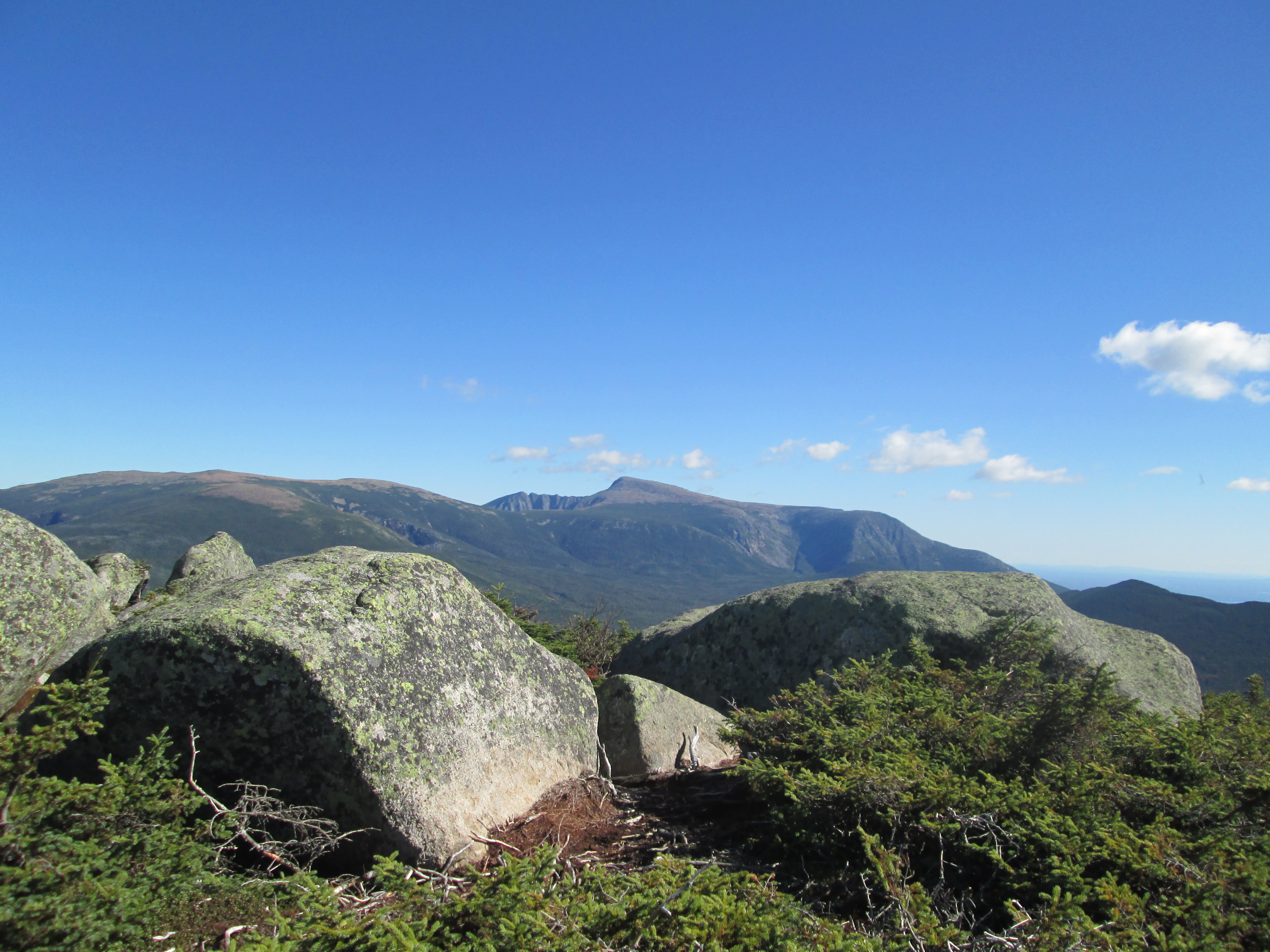
Making the film, like getting into Baxter State Park in the winter and up to Chimney Pond and filming the ice climbers with all your gear and all that stuff – that’s physically and logistically challenging. But still it’s kind of exhilarating and enjoyable at the same time because you’re there in the winter, and climbing Katahdin – we climbed it at night to get the shots from the summit of Baxter Peak at dawn near the end of the film. We were up there before dawn so we hiked from Chimney Pond starting at about midnight. It took us about four hours and got up there just in time to set up the film. Normally it would take two, two and a half hours and it took us probably three and a half because we were hiking at night with all of our gear. We got lost at one point.
Lost on a Mountain in Maine, Part 2
 Right? Because you’re on the table land and it’s just flat and you have to find the trail and it’s dark out. But we picked a night when there was a full moon, so that helped and we had flashlights, but we were off the trail and we probably lost 15 minutes getting off trail when we realized, “Oh, we’re going the wrong way.” We made it and filmed dawn.
So there were those types of challenges, and then getting permission to film and all of that, and the biggest challenge is raising the funds. And we shot it on film so it was more expensive. People today think it isn’t very expensive to film except for crew, but when you’re shooting film, it’s like $120 for every ten minutes, roughly. That’s just raw stock, never mind the transfer so it isn’t like you can turn on a video camera and let it run for an hour. So there were a lot of expenses in making the film.
And what I learned? With each film you get better at camera, and I always do a lot of filming in my films, but when I’m interviewing people I always work with a full crew. I learned how to work with a composer to score a film, and that was exciting. I’d sort of done that before but this was the first big scale with composition. I recorded with the Penobscots singing their traditional songs and I cut them a CD.
Did you have an intended audience?
With being an independent filmmaker coming from an art background that’s always been a problem. At first you don’t have a clue who your audience is gonna be, at least the way I learned filmmaking. I just wanted to make films, and then I would sort of figure out, “Gee, how do I show this?” I wouldn’t recommend that way but I learned that way. So with this, as the film started getting bigger, I started getting smarter and thinking, “Well I gotta think of the audience or else I’m not gonna be able to make the next one after this.” So with my film on Todd Webb, I just learned to find those niche audiences.
When it came to Wilderness and Spirit I knew, there’s like 70,000 visitors each summer, so I knew to sell it in the park store. It actually did quite well. I sold lots of them. One thing I didn’t realize was that – the film was done and ready to be premiered in November. Turned out that I finished it in early September and I wanted to allow a month and a half or two months before I actually premiered it. I knew there was a great interest in Maine and Katahdin. They put me on the front page of the Press Herald and I was on two different news stations, so when I did the premiere, I had all this publicity and part of that was the subject. When you’re making documentary films, your subject really publicizes your film. People in Maine really love Katahdin, so it got a lot of press and I did a number of screenings in Maine and they either sold out or did really well. Then because I did it at Christmas, it was when people were beginning to switch from VHS to DVD and I just sold a whole bunch of DVDs and VHS for Christmas because it was near Christmas, and I didn’t even think about that when I finished the film! Everybody was saying, “Oh, I want this as a present,” and I still sell it today and I still have screenings for it 13 years later.
Where can someone find Wilderness and Spirit?
I sell all my DVDs on my website, FilmsByHuey.com, and the library has bought all my films so SMCC students can borrow any of my films from the library. [Baxter State Park] has a store and they sold it for ten years there, and L.L. Bean sold it. I sold a lot through L.L. Bean.
What projects are you in pursuit of now?
I’m doing a film on Henry David Thoreau. It’s called Henry David Thoreau: Surveyor of the Soul because he was a surveyor and a writer. I started that right after Wilderness and Spirit, in 2004. Then when I started making my film on Marian McPartland, the jazz musician, I sort of put it on hiatus. I’ve got footage from 2005 that I filmed, and then I restarted in 2011 and we’re gonna release in 2017. [Knocks on wood] Right now I’ve raised a good amount of money but I still have a big chunk to go. I’ve been writing a lot of grants, doing fundraising, and doing a lot of filming. Been filming pretty much nonstop since 2012.
How can people help with fundraising efforts?
I haven’t done a Kickstarter-type thing. Wilderness and Spirit – I raised a lot of money from individuals and I held fundraising parties because Kickstarter wasn’t invented yet. This was in 2000, 2001, that I raised the funds for that. I think there would be a lot of individuals interested in this but I’m not quite ready yet. You need to cut a trailer, which I do have now but I haven’t made it public yet. So I probably will very soon do a public fundraiser for individuals in the next few months. Right now I’ve just been going to institutional funding because I need a big chunk of money to make it. I was hoping to get one or two big grants under my belt and then seek individuals to wrap up the funding. So it’s a matter of timing. You don’t want to start too early. In a Kickstarter, you know within a year it’s gonna happen, and it’s still two years away. I still have to time it so people feel like they’re getting rewarded for their investment.
Finally, what’s your favorite trail on Katahdin?
I don’t know if I can hike it anymore but Helon Taylor is a bear of a trail, but boy it’s spectacular – crossing Knife’s Edge to Baxter Peak. But now if I go up again I’ll go up and down Saddle. [Laughs] There’s no easy trail up Katahdin; that’s just the easiest. But I also love going up Hamlin Ridge. I love that – you climb like you’re going to Chimney Pond and you take a right, and you go near the Basin Ponds and then up North Basin Pond and go up Hamlin Ridge, and you’re on that peak. And then you can actually come down and slightly up to Saddle and down. That’s a really nice hike. I’ve climbed all the mountains in Baxter State Park. That’s what I like about the other peaks – you get these great views of Katahdin and they’re all different.
Categories: Uncategorized
 The SMCC Beacon