
By Garrick Hoffman, Liberal Arts Major
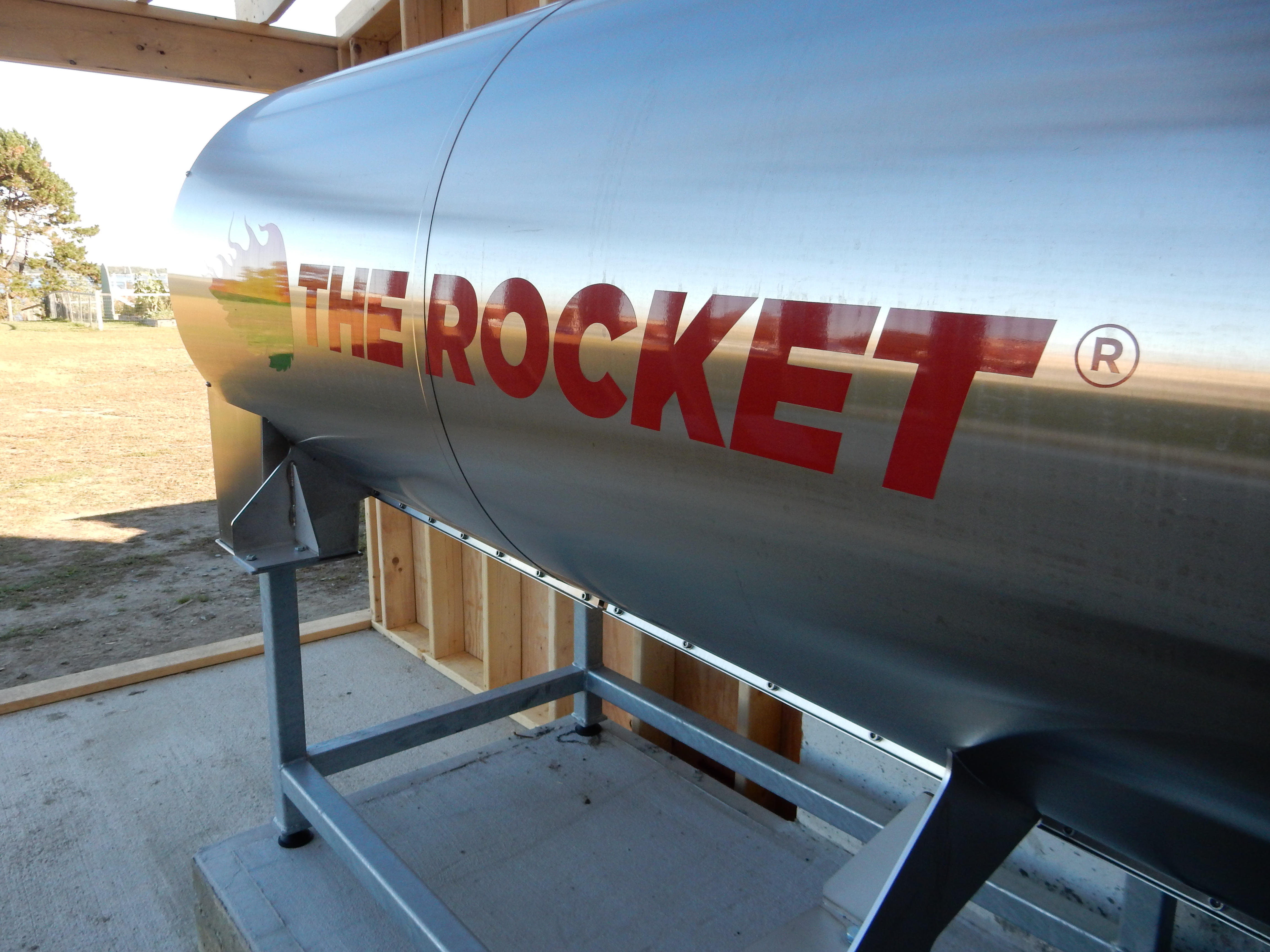
This past summer saw the arrival of a new friend of Southern Maine Community College, and it came in the form of stainless steel.
The Rocket, designed and manufactured by UK environmental consultant company Tidy Planet, is a composter that processes food waste and turns it into compost. The composter now sits comfortably behind the Culinary Arts building and will not only be used to discard food waste into for the Culinary Arts program, but will be used for the Horticulture program when compost is produced.
Spearheading the project to acquire The Rocket was Dave Palm, an instructor in the Horticulture department. Mr. Palm was kind enough to answer questions for The Beacon, for the curious mind, and of course for the average green thumb.
What is The Rocket, and what does it do? What will it be used for?
The Rocket is an in-vessel composting system. This means that it is totally enclosed to help eliminate rodent and bird issues, as well as eliminate odors when it is operating properly. The Rocket will be used initially for food waste from the Culinary Arts program and McKernan Center’s many events. I am also planning to put compost collection buckets in many of the buildings on campus for SMCC staff and students to dispose of their food waste. Eventually we hope to get the Dining Hall and Seawolves Café looped into the process.
The compost will be used on many of the landscaped beds around the Horticulture Building, the Spring Point Arboretum, campus, and once we get it going at full capacity, the Community Gardens behind Culinary Arts.
How does it work?
The Rocket is a thermophilic – or an active – composting system. It is a 14-day process to get fully processed compost. A thermophilic compost system is an aerated system that uses aerobic (in presence of oxygen) microorganisms to convert the food waste down to an unrecognizable material (compost). These aerobic microorganisms are why a thermophilic composting process does not have the offensive odors of an anaerobic process. Anaerobic
How did the idea for it come about?
Cheryl Rich, the Horticulture Department Chair, and I had been discussing the possibility of getting a composting system on campus for a few years. We use compost for topdressing our gardens in front of the Horticulture building to help reduce weeds and to improve our soil quality. We have been buying it from an outside source and we felt that we would generate enough food waste as well as leaves and yard waste to supply a good share of what we require. Also, while talking to Geoffrey Boardman, Department Chair of Culinary Arts, he mentioned that part of the Accreditation process for their program was sustainable practices which involved composting their food waste. I felt it was time to move forward, so we put the composter on for aPerkins Grant purchase last year.
Did it take long to install?
The installation process was not long; however, the decision making process as to where it would be installed as well as the logistics of setting up the process for collecting the food waste has been a long, ongoing process.
Does it have a long life span?
Being constructed of stainless steel, it should last for many decades. When will see its effects in action? How long does it take to produce compost? We fired up The Rocket on Friday [September 25] with the initial process. This required 29 gallons of food waste (thank you Culinary Arts), 20 gallons of wood chips, and 20 gallons of active compost to introduce the microorganisms to kick-start the compost process. We should have compost coming out in 14 days. Initially we may have to return this to the composter as it may not be completely processed the first time. It normally requires 4-6 weeks for the composter to get a healthy thermophilic microorganism population established. Once this stage is complete, the compost will need to sit for 3 weeks to reestablish the mesophilic (ambient temperature) microorganisms.
Will it be effective in the winter?
It being a thermophilic process, the internal temperatures will reach 150 degrees so it is just as effective in the winter.
How will The Rocket benefit SMCC, the students, the future, and the environment? (In other words, why do we now have it?)
One of the main benefits is reducing our carbon footprint and practicing sustainability by keeping the food waste on campus and repurposing the by-product of it to beautify campus. The other benefit is to reduce operating costs as we will no longer be paying to have the waste removed from campus.
[Other benefits include] better quality plants in the landscape and less weeds to distract from the landscape. Students in our program will benefit as we will incorporate why composting is important, [and it will] help them understand the process. My hope is that all students will begin to see the results of composting and develop a deeper appreciation for making and using compost in their gardens and landscapes.
—
Mr. Palm will be holding a number of educational meetings on The Rocket over the next few weeks. He says that if anyone is interested in having a compost collection bucket(s) in their building to let him know so he can determine how many buckets you need. He can be contacted at dpalm@smccme.edu
Categories: Uncategorized
 The SMCC Beacon