
By Paul L. Young
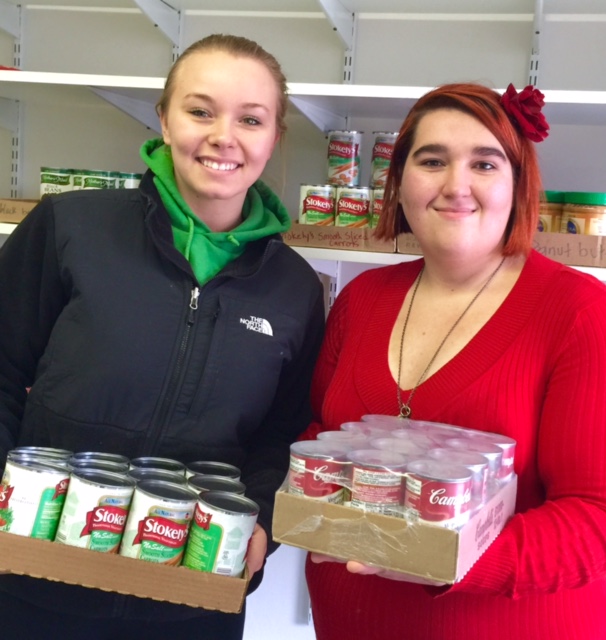
A requirement that students entering SMCC’s Department of Human Services commit to is 10 hours volunteering at human service organizations, which has jump-started metro Portland’s economy by more than $30,000 over two years. That figure does not include the value of hospital beds obtained by HS students this term that are urgently needed for patients detoxing from alcohol and substance use.
Primary care providers in California, Florida, Texas and Arizona committed 15 beds to patients in Maine, valued at $375,000, thanks to five student volunteers working with Portland Recovery Community Center.
Since 2014, SMCC’s Human Services Department has required each entering student to fulfill 10 hours of volunteer work – called service learning – with a human service organization. According to assistant professor Kathryn Stannard, this “is a kind of learning that takes place through personal exposure and direct experience that gives depth, life and new meaning to what can be learned in a classroom.
“It is my belief that students will learn a great deal more about themselves, as well as others in the community, when they take the risk to offer their services to meet a need in the community,” Stannard said. She estimates that three out of four students continue to volunteer after their commitments are done. A number of others are hired as employees of their service organizations and at least one student received an offer of marriage.
Jason Rogers is one of those students who will stay on as a volunteer. His service learning assignment took him to the Preble Street Resource Center in Portland, where he helped organize clothing donations and worked in the kitchen. “I learned how valuable the soup kitchen and other resources Preble Street provides are to Portland’s homeless population,” Rogers said. “I left every shift feeling good about the work I had done. I also feel like I have become more conscious of not wasting food in my own house. I know there is very little difference between me and people that have fallen on hard times.”
Working with STRIVE in South Portland, an agency that helps children and adults with developmental and emotional disabilities to navigate the activities of daily living, “I learned a lot about myself,” said Amanda Nadeau. “I learned that just because someone has a disability doesn’t mean they can’t do things on their own or have the same opportunities as a person without a disability. This is something that I may like to do with my career.”
As a nation, Americans hear endless political rhetoric about the burden of social services and our national “safety net” on the economy. We do not hear much about the countless contributions of time and money made by private citizens to reinforce that safety net and provide basic human services to individuals and families in need.
Most of the charitable nonprofit organizations that account for the vast bulk of these services receive some form of assistance from federal, state, and municipal governments. Urban Institute reported in its 2013 National Survey of Nonprofit-Government Contracts and Grants that approximately 30,000 charitable nonprofits received $81 billion in government funds for services to ultimate service recipients. That amount accounts for nearly 60 percent of government funding to all charitable organizations.
But government funding is less than half the amount pumped into human services by dedicated volunteers. Independent Sector, an organization that researches trends among nonprofits, put the value of volunteer time last year at more than $23 per hour. The Corporation for National and Community service reported that 63 million Americans donated 8 billion volunteer hours to their chosen charities in 2013, totaling $173 billion contributed to the U.S. human service economy.
Jenny Clark was one of the students who helped Portland Recovery Community Center obtain 15 precious hospital beds. Of her experience she said, “I’m definitely going back to help again. It’s about giving back to my community and offering your love and support to those who feel hopeless and lost.
“I remember feeling that way years ago, and it was places like this and the people who volunteer their time who made it possible for me to thrive and become who I am today. Now it’s my turn to be that person who does that for someone else.”
Categories: Campus News
 The SMCC Beacon