Illaria Dana
Education Major
We met in Harbor View Memorial Park where the bridge extends from Portland to South Portland. Planes flew above us. Cars approached and receded, and we sat in the grass.
Artist Brian Doody has completed a short set of photographs which he will print and distribute. “The thing that I’m working on now is still developing, but I have a small part of it that I want to publish to get the gears rolling and because of expenses. Ultimately, the larger project I want to be a printed book. I’m working on a small book.” Doody smiles and continues.
“I’m more intrigued with having done the smaller version all myself. The goal is to build momentum and show everyone what I’m all about.” The process behind this book is meditative and, in a way, an initiation. “It can be hard to take myself seriously. Every day I have to remember that.”
Doody grew up in a small town in Maine, where images are abundant, but modalities are not. “I think it’s a class thing. Growing up poor and being poor, you can feel weird about selling things. It’s a weird dynamic. What I’m making now is worth something.”
The move from a small town to place where people are making is something he comes to terms with. His feelings infuse his images; they have exploded. Compiling his work has been a source of abundance and reflection.
“The work that I’m finished with now is about 20 to 30 pages. It’s mostly 35mm prints with some old, old digital work. Those are pretty different mediums, but those are what I relate with most. Very very digital, to the point of transparency or 35mm, which is a very long process where you have to go give it someone else, as a person who doesn’t have a darkroom, get it, pay them, and find a way to upload the work. I like that it’s this very long, challenging process.”
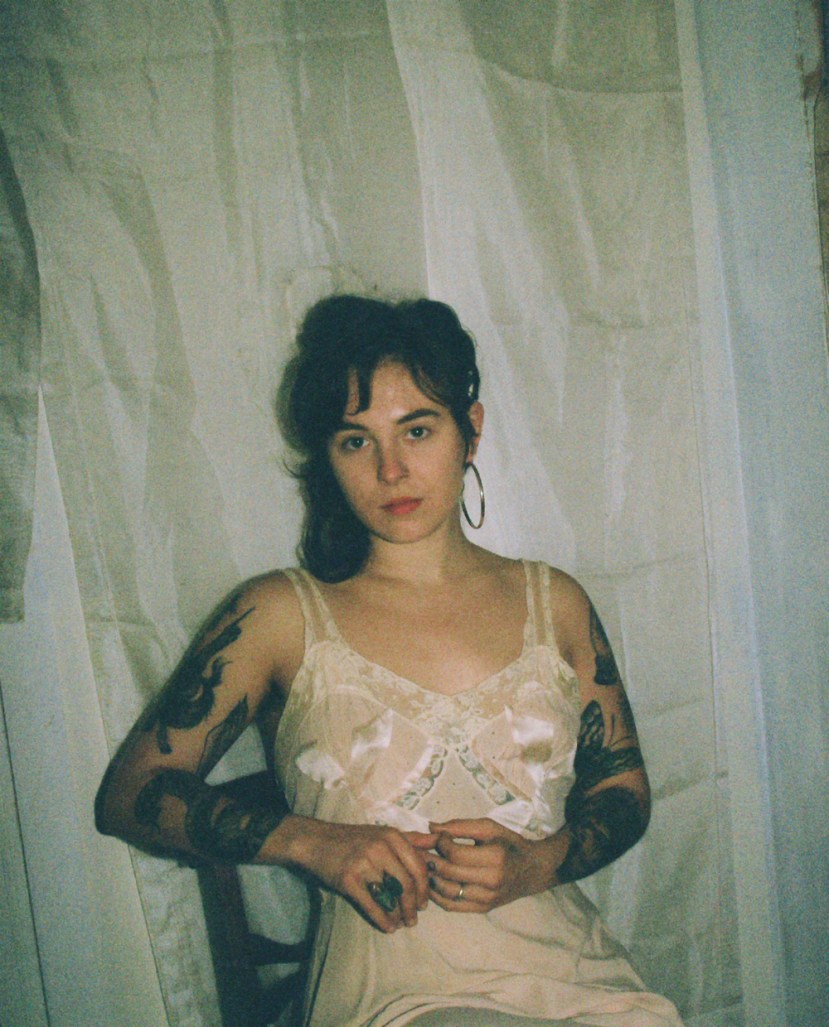
“I learned how to use 35mm when I was 18. Then I stopped, and wasn’t making work for a long time.”
Doody’s use of the two mediums creates a balance based on paradox, a paradox that does not need to be explained to hold power and to warrant exploration.
“I had my years of turmoil and partying. Now that I’ve stopped all that, I’ve come to terms with having a lot of shit feelings every day and having really intense, crippling feelings and using those.”
When drinking, Doody explains, “You have this completely different version of you, that is able to do all these things that you love in this annoyingly confident. Then you stop doing them, and you realize, ‘I’m not like that at all.’” But his real work is something more expressive and whole. It speaks for itself. “This is the thing that keeps me here, grounded and alive.”
“Every time I do shoots now, I find myself being like, ‘Woah, I feel so high.’”
In isolation, Doody found that digital photography and his phone were a source of power. “I realized that I relate a lot to my phone. I love that. I’m attracted to being on Instagram, to being this person that I wanted to show, that was comforting.
“About a year ago, I got back into 35mm. I found my inspiration from looking at other artists. I delved a little deeper, and realized it’s where we are as a society. It’s something I want to explore, to delve deeply into. I want to take it to the next level of using it as an outlet. Wait ten years and this will sound ridiculous.”

Doody has strong relationships with the people he shoots. This is essential for the photographer. “I’m hyper focused on not exploiting the people I shoot. That’s something that turns me off about a lot of photographers. That’s where class comes in. I’ve been looking into the artists that I look at, their work, and where they come from. It’s going a lot deeper than I ever expected it to go.
“Someone I’ve been looking at with a weird eye lately is Diane Arbus. She did a lot of portraits of ‘freaks’, of people who had disabilities, drag queens, and she has this very exploitative way of portraying them. I used to like these photographs a lot, but now I’m really turned off. Where she comes from, she’s kind of had it in her hands. It’s hard because she’s also very talented.
“It’s really important to me to have people be comfortable and to explore a side of themselves that they love. I’m still learning how to do that, how to direct people and then back off and let them do their thing.
“What I’m really looking for is just what they want to show.”
Categories: Uncategorized
 The SMCC Beacon