
Hali Sarah Parsons
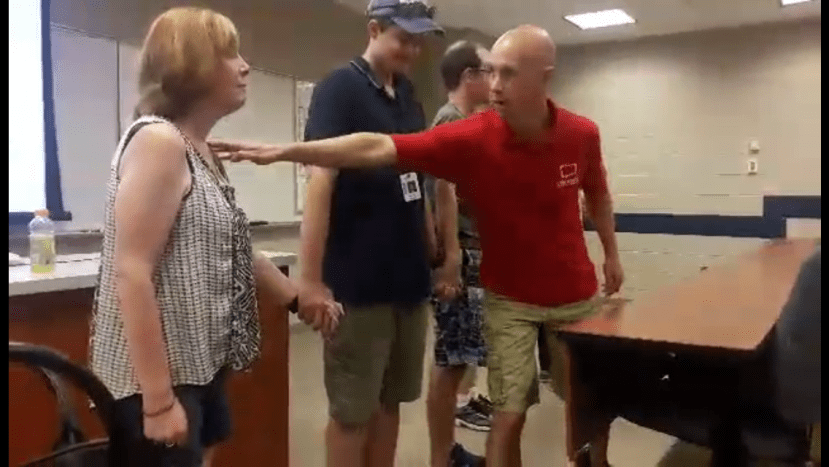
Who knew high-fives actually have a science? Joe Urbanski broke down the key components every person should be educated on to make differences in every institution of society. August 27, 2016 ON A SATURDAY before classes began, Shane Long coordinated the SMCC Student Leader Boot Camp. Surprisingly, there was nearly a full room of students when the teachings of the Five Practices of Exemplary Leadership began.
Joe Urbanski from Collegiate Empowerment, was the facilitator who flew all the way from Northampton County in Pennsylvania! Full of high energy and knowledge, he exposed some secrets such as paying attention to “little yesses” as he called them. Explaining how he was able to get the students to do whatever he wanted, Joe capitalized on motivation and not manipulation. Along with that, he described the difference between confidence and cockiness. No matter what your role is in life, do it with “purpose, not position,” was a message from Joe.
A fierce, repetitious clapping of the hands revved up the students with energy. This was followed by regular high-fiving with other students to help one another “break the ice” and begin to feel comfortable exerting themselves. One thing that helps people do things expertly is to do something really badly and Joe exemplified this to the students by having them purposely do “bad” high fiving.
To help students remember the practices, they were instructed to use hand gestures with each while reciting them repeatedly. First and foremost was Modeling the Way. Breaking this down, we must clarify our values. From our values, we create our beliefs. In turn, we make commitments that break down to our personal rules. In thus, developing our habits. When we can align all these things, we are being true to ourselves which can be essential to being an effective leader.
The second practice was Inspire the Vision. Inspiration is the key component to leadership. We can never really make someone do something no matter how much we want them to. Joe taught students that we can only INSPIRE others to motivate themselves. Motivation comes from the inside and everyone is motivated differently. Finding out what inspires others is how we can allow them to commit themselves to anything.
Challenge the Process was next on the list. The exercises used to demonstrate this really got students to think. Joe set some rules and a common goal between a few volunteers. When he let them begin (with their eyes closed) he took the very rope they needed to complete the task as they searched around on the ground for it. Most students laughed and unnoticeably some were appalled. After they ended up completing the process by one student thinking and looking somewhere else for the rope, Joe told the students who were not volunteers that he never said they could not intervene – and that was what challenging the process was all about!
Challenging the process is such a hard for many people to do. We have all been raised to follow the rules because they have been reinforced with negative behaviors. However, if no body starts to stand up for the things MANY people agree are NOT right – How will anything ever change!? It is time for us to “build a culture that agrees it’s okay to challenge the process,” quoted by Joe Urbanski. So many people are “just doing their jobs.” Who wrote these protocols? Dig deeper, challenge the process.
As a reminder, active listening is important and that is a component to the fourth practice students studied with Joe, Enable Others to Act. When we support everyone’s decisions and foster cooperative relationships, this makes all the difference. Finally, the last project Joe admitted he wanted to strengthen for himself, was Encourage the Heart. This involves giving others recognition and the simple but impactful use of saying thank you. Students left with knowing how to give the “best complement ever.”
Categories: Campus News
 The SMCC Beacon