
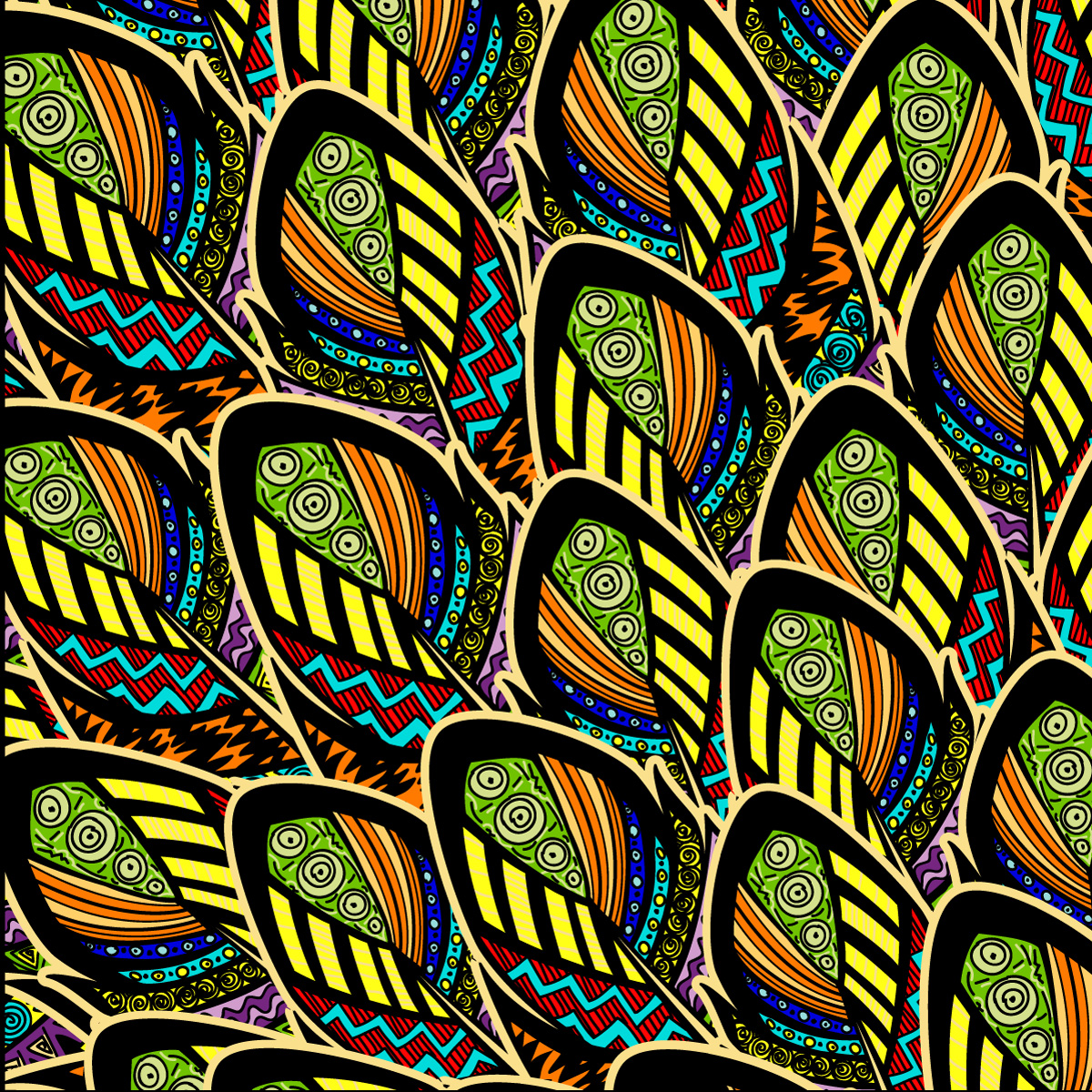
African wax print fabric, also known as Ankara fabric, is produced in an array of bright colors and patterns, with each pattern bearing a significant meaning. Although it was originally mass produced as a cheap fabric, Ghana managed to upgrade it to a higher level of quality that ultimately led Ankara fabric to become synonymous with elegance and sophistication, a trend which then spread to different parts of the African continent.
When I first met my husband’s family I was fascinated by how beautiful all the women looked. They had chocolate sun-kissed skin, and were gigantic in physique. His sisters were draped in long oversized tye-dye style Ankara fabrics and larger-than-life head wraps. His mother was dressed in a very colorful two-piece Ankara outfit. They were all accessorized with bold gold jewelry neck pieces, matching earrings and huge rings on either hand. They exuded a sense of grandeur.
The wax print textile went beyond fashion. Through its prints, it was worn to tell stories, make political statements, commemorate politicians and to assert social statements. My mother-in-law often wore wax printed fabric with the figure of Jesus on it. For her, this was a way to express her religious identity. She also wore these on days that she would be fasting, a sign for us to give her space on her fasting days. “Many of these designs are printed only once and reflect a specific historical moment, a current social concern, or popular opinion,” writes Kalamu ya Salaam in his Neo-Grit information blog. “The equivalent of a bumper sticker, these designs deliver a punchy endorsement or criticism”.
I was excited to find out that it was possible to find these kinds of fabrics here in Portland. Most stores that sell the fabrics are grocery stores and just stock them as additional items in the store. After a brief search, I eventually came across Portland Trading Co., owned and operated by Kazeem Lawa. A flamboyant store in the heart of the city, beautifully decorated with a range of textiles, fashionable clothing collections and a variety of artistic pieces.
Kazeem’s store stocks a range of items from men’s and women’s clothing, shoes, home goods, jewelry, and other unique items all sourced from different parts of the world. But, to my disappointment, no Ankara wax prints. When I asked him why, he told me that when he tried to focus on African wax prints for one of his summer collections, it was not well received by the locals. “It was hard to sell it because white folks were worried that it is gonna be cultural appropriation,” said Lawa. “The people that bought it were either white folk from academia world or white people that live in Europe and come here for vacation… I couldn’t bring it because it’s too African”.
Personally, I didn’t consider the question of cultural appropriation in regards to African fashion until my brother’s wedding to his American born Italian wife two years ago. As part of the wedding my brother wanted to incorporate our traditional African attire. We were so excited to showcase our rich Xhosa (South African tribe) regalia. When we shared our idea to his American family they were excited for us and were intrigued to see how this would turn out. When my brother surprised them with their own outfits they were overwhelmed with honor but were also worried that they would appropriate to themselves something that was sacred for us. I had never thought about our attire in that way until that conversation. It sparked a question in me- would it really be cultural appropriation?
Contrary to popular belief, this fabric did not originate from Africa. According to Dolapo James owner of Urbanknit, these textiles were brought to Africa by Dutch merchants in the 1800’s, and their true origins were inspired by the native Indonesian Batik prints. The Dutch first produced the Ankara fabric to copy and mass-produce hand-drawn wax Indonesian batiks. These were not successful in the Indonesian market but found a receptive audience in [West] Africa. After some countries in west Africa gained their independence in the 1960’s, they also began to produce the fabrics.
The fact that my brother’s family expressed concern about being culturally intrusive was a sincere acknowledgement of our culture on their part. However, I am not convinced that this would be cultural appropriation. If one uses something borrowed from another culture and acknowledges it as borrowed or celebrates its origin, it is not cultural appropriation in my opinion.
“The key thing with using or wearing African prints or any fabric that is distinctly
associated with another culture that is not our own is acknowledgment,” writes James, “There have been instances where entire catwalk collections are made using wax prints with not a single mention of the fabric origin and its rich stories. This is where people become uncomfortable as this can’t be deemed as mere oversight”.
The evolution of the wax print has become so mainstream that calling it cultural appropriation would be denying its global reach. Its versatility, richness in color, durability, uniqueness, and timeless appeal have made it one trend that will transcend centuries and continue being on global fashion discourse.
Although I was quite disappointed that Kazeem no longer sells African wax prints, it is understandable that from a business perspective, he would make decisions based on what sells and doesn’t. Hopefully in the future white and black people will feel comfortable wearing these beautiful garments and that there might be stores accessible to them.
Categories: Arts & Culture, Featured, SMCC, Uncategorized
 The SMCC Beacon
I come from a very different background than you. In fact I come from a background that would far more likely lead to me being accused of cultural appropriation than being culturally appropriated. Despite this I love the sentence “If one uses something borrowed from another culture and acknowledges it as borrowed or celebrates its origin, it is not cultural appropriation in my opinion.”
I came to a similar conclusion to you as I’ve watched the world with the phrase “Cite your sources” becoming my motto in these situations. Just as you speak of acknowledging the origin I see the same. To me it’s okay to borrow or experiment with other cultures and Ideas, you just have to acknowledge the history and educate yourself. Indeed ones grip of the subject matter and the larger world around them is often strengthened when you expand horizons and acknowledge the sources.
It’s amazing how two people from distinct backgrounds and who are often depicted as opposed when speaking about cultural appropriation have found common ground separately. Thank you for this article
LikeLike