
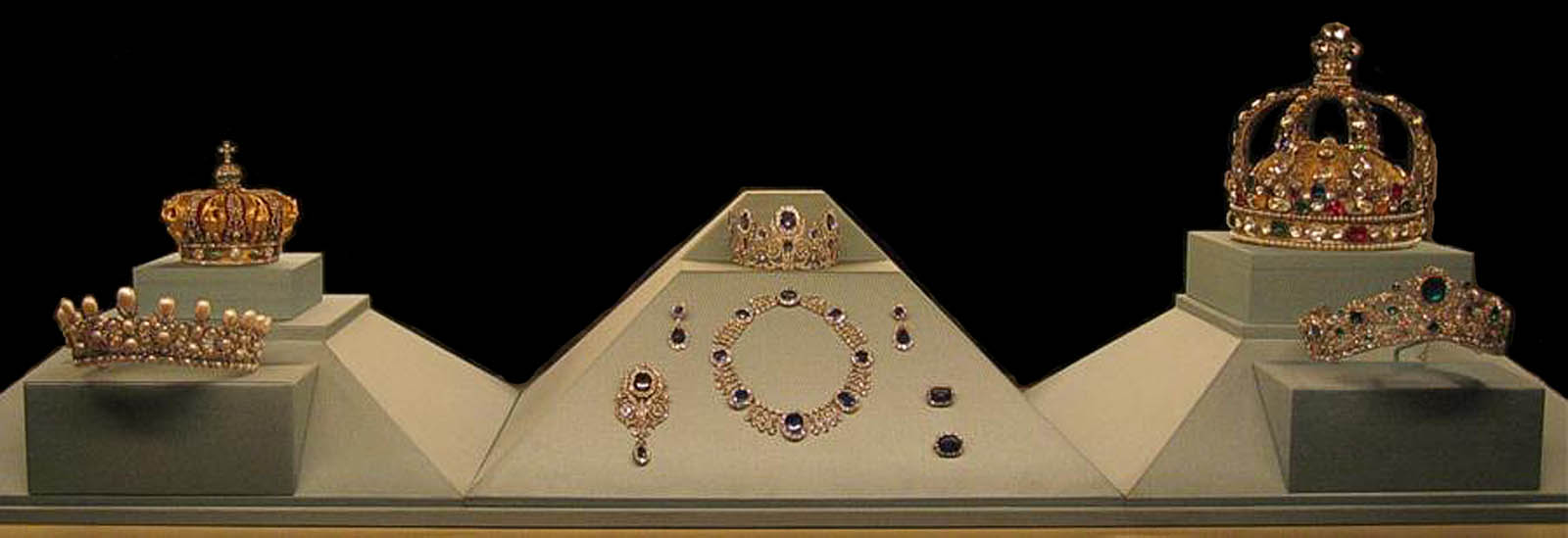
Source: Michael Reeve
For a week and a half, the world has been captivated by the daring Louvre heist that occurred on October 19 when four thieves broke into the Parisian museum and former royal palace, stealing major pieces of the remaining French crown jewels in a brazen daylight robbery that took only minutes to complete. The arrest of two suspects on October 25 has garnered even more publicity. But who did these stolen jewels belong to, and why are they important to France’s history?
In the years following the French Revolution (1789-1799), which saw King Louis XVI and Queen Marie Antoinette dethroned and executed, France endured an unstable period of roughly 80 years in which it seesawed between a monarchy and a republic. Sandwiched between the First, Second, and Third Republics were the two French Empires, and a restoration of the original French monarchy. The jewels stolen in the Louvre heist came from these periods, and belonged to Empress Marie Louise, Queen Hortense de Beauharnais, Queen Marie-Amélie, and Empress Eugénie de Montijo, all central figures of the time.
Who Were These Queens?

Authors: François Gérard (1770-1837), Louis Hersent (1777–1860), Franz Xaver Winterhalter (1805–1873.)
Empress Marie-Louise (1791-1874) was Napoleon Bonaparte’s second wife, and Empress of France during the First French Empire (1804-1815.) Napoleon married her to strengthen political ties between his empire and the Austrian Empire. Following Napoleon’s exile in 1815, she returned to Austria. Her emerald-and-diamond necklace and earring parure (a set of jewels meant to be worn together) were stolen in the Louvre heist.
Queen Hortense de Beauharnais (1783-1837) was the stepdaughter of Emperor Napoleon Bonaparte by his first wife Empress Joséphine. She became Queen of Holland when Napoleon made her husband, his brother Louis Bonaparte, King of Holland in 1806. Napoleon forced Louis to abdicate in 1810, and Napoleon lost his own throne in 1815. Queen Hortense was exiled and lived in Switzerland where she raised her son, the future president and emperor, Napoleon III. It was the tiara, necklace, and one earring of her sapphire-and-diamond parure which were stolen in the heist.
Queen Marie-Amélie (1782-1866) lived through a different era of French history during the July Monarchy of 1830-1848. After the fall of Napoleon Bonaparte, she and her husband Louis-Phillipe, a cousin of Louis XVI, were put on the throne as “citizen monarchs.” When her husband was overthrown and the French Second Republic began in 1848, she was exiled to England and remained there until her death in 1866. She had shared the sapphire-and-diamond parure with Queen Hortense.
Empress Eugénie de Montijo (1826-1920) was the wife of Emperor Napoleon III. She was the First Lady of France from 1848 to 1852, and Empress of the French during the Second French Empire (1852-1870.) During her reign she was known for her charitable causes, such as visiting the sick in hospitals, supporting French art and culture, and her educational reforms. When the Second Empire was overthrown, she went to England with Napoleon III and lived there until she died in 1920. During the Louvre heist, her coronation crown was stolen and subsequently recovered damaged after being dropped in the street. Two diamond brooches and a pearl tiara, also belonging to Empress Eugénie, were stolen during the heist.
These jewels, which French ministers labeled as being of “inestimable value” were symbols of a different period of France’s history, and an important part of its heritage as a nation. The women who owned them were key figures who each held positions of power—both real and metaphorical—in shaping their own times and, through trickle-down effects, the France of today. The loss of these jewels has been deemed priceless not for the value of the pieces alone, but because of what they represent to France’s culture and past.
Categories: Uncategorized
 The SMCC Beacon