
“Four thousand holes in Blackburn, Lancashire
And though the holes were rather small
They had to count them all”
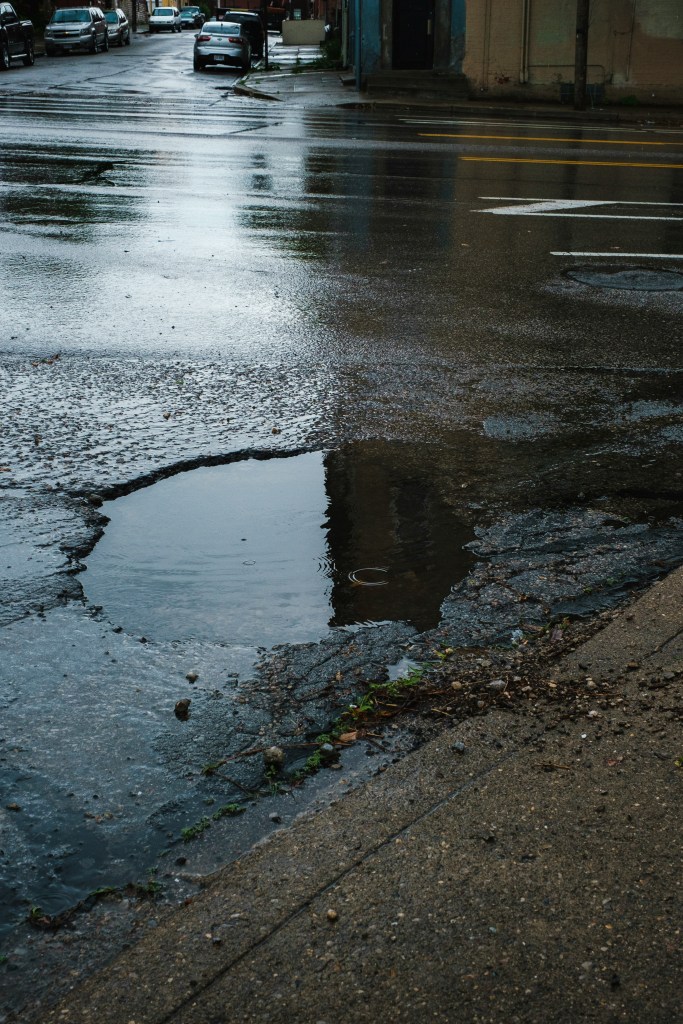
The Beatles wrote this song about potholes in the 1960s, but there are still problems going on today in Portland, Maine. As an SMCC student who commutes to and from campus, it is common to run into cracks and potholes in the road. Some of them are minimal nuisances, while others are huge craters. It makes you think: this is dangerous, why is this still on the road? Winter might be Maine’s favorite, but our tar roads are subject to damage due to precipitation overtime.
A phenom cycle that happens in Maine and other cold weather states is freeze, thaw, repeat. Precipitation comes down and freezes from cold weather, and eventually it melts within the pores of Portland’s roads, both geological and man-made material. Obviously, this process is a serious contributor to the deterioration of the rough streets in downtown and is repetitive throughout the winter season. Currently the city is in a patch and repeat phase which means spot filling in various locations, but Portland residents are more concerned for long term road quality, and the safety of deteriorating infrastructure, as well as the financial toll.
As a writer for the SMCC Beacon, I was able to attend the Midtown Community Feedback Meeting and interview the city Planning Office.
Aziel: Portland drivers think potholes are chronic downtown. Is that perception accurate based on the data that you see?
Planning office: So, in our climate, potholes are kind of an issue everywhere, city wide. We certainly have some roads and corridors that are in worse shape than others. Congress Street in particular, but the city prioritizes its maintenance and upkeep of roads based on the need. So, when we notice that a road is getting in particularly bad shape, it goes higher up in the priority list for repaving or resurfacing. There are other factors that go into that, but in our climate, potholes are always an issue with freeze-thaw cycles in the summer.
Aziel: Beyond winter weather, what are the causes of potholes and Johnson?
Planning office: So the big one that we’re learning more and more about is the size of vehicles as vehicles. As vehicles get larger, whether it’s trucks or just as cars get bigger and bigger, they put more wear and tear on roads. So even if there’s the same amount of traffic, larger vehicles put more wear and tear on roads. And so that’s something that we’ve seen, not just in Portland, but everywhere. As cars get bigger, they wear and tear on roads increases, which is a challenge.
Aziel: Are some holes more vulnerable than others because of what’s underneath?
Planning office: Yes, sometimes, wear and tear on roads can expose utilities and that’s a major issue, particularly downtown, where we have a lot of buried electrical wires and telecoms and things like that. In those instances, that becomes an emergency, where it needs to be fixed ASAP.
Aziel: How much do car and bus acceleration contribute to the deterioration of the road?
Planning office: A lot, again, it’s kind of going back to this idea that, you know, bigger vehicles put a lot more wear and tear on roads than smaller vehicles. One bus probably does as much damage to a road as five or six cars in the same trip. So the speed, and, you know, frequency with which cars are going is a big factor of wear and tear.
Aziel: Who decides how much money goes into Portland’s road infrastructure, and what goes into that decision?
Planning office: So that is determined, partly by the city council, partly by the department public works, and partly by the state. So, the state is responsible for maintaining some roads, and the city is responsible for maintaining others. There’s a lot of coordination between the city and the state on what the needs are and ultimately that is determined by the city council and their annual budgets.
Aziel: What are your goals for addressing this issue?
Planning Office: The goals number one is what we’ve started to do is change how we pave and maintain roads. There’re different methodologies and different materials that you can use to slow the rate of wear and tear, and that’s really the biggest one. It’s a challenge, again, given our climate, given the increasing size of vehicles and budget constraints about how much can realistically be done. The biggest things are just changing technology and potentially reducing the number of vehicles on the road.
Categories: Uncategorized

